| Subscribe Read in Browser |
 |
| Stat Of The Day |
| $7.7 Billion |
| That’s the total losses from financial scams that those age 60+ fell victim to in 2025 – a major spike and roughly 37% higher than the year prior. Scroll on for the scams to watch out for…and how to protect yourself and those you care about. |
|
|
|
| This Week In Your Wallet |
 |
Older adults are losing more – a lot more – to financial scams, many of which originate online. Experts say five scams are the most common right now and knowing them can help protect the savings you’ve worked hard to build. At the top of the list is the "grandparent scam." Fake grandchildren call claiming they need help – car repairs, late rent, a medical emergency, even bail money – and beg the "grandparent" not to tell anyone. In other versions, the caller poses as a police officer, doctor, or lawyer trying to help the grandchild. AI has made these scams even harder to catch: con artists can now clone a real relative's voice and use it to commit fraud. "People who run grandparent scams often ask to be paid through gift cards or wire transfers," reports the National Council on Aging. "These don't always require identification to collect, which means victims have no way ever to recover their money."
Are AI recruitment tools hurting women? Some think so and are "Botoxing" their resumes – stripping away any references to age or decades of experience – just to get past the bots. The BBC spoke with over 60 women aged 40 to 65 across a range of industries who’ve struggled to find work despite senior-level résumés. Many say they’ve submitted countless applications only to get automated rejections – or silence. "A lot of us have been told by career coaches to shave off the first 10 years of work on our CVs just to ensure we don't come across as having worked for too long," says Koeyli Jaluka, age 49, who has held senior roles across manufacturing, corporate and healthcare and unsuccessfully applied for over 400 jobs in recent months.
Has your budget taken a hit recently? Your emotions could be to blame. That impulse buy at checkout, or the detour into T.J.Maxx to kill 20 minutes with some "retail therapy" – it's not random. Experts say certain emotions are especially likely to trigger spending, and anxiety is one of the most common. "When emotions are high, spending concerns are low," says Doug Milnes of MoneyGeek. That's how a hard day at work turns into a $100 trip through Target's $5-and-under section in search of a serotonin boost. For more on recognizing the emotions that push you to spend, click here. |
|
|
|
| Things That Save You Money |
 |
| ● |
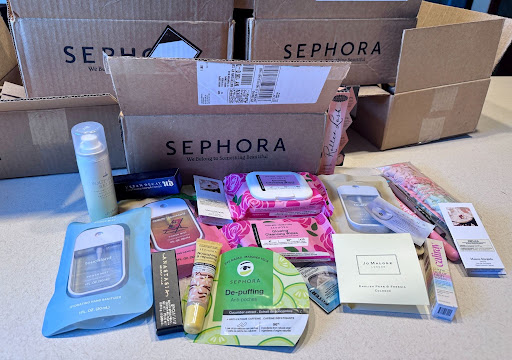
We’ve already told you about the "Paze craze" – link an eligible credit card to a Paze digital wallet and earn $10 back for every $10-plus purchase at select retailers (capped at 10 transactions per card) through September 10. One HerMoney staffer put this to the test with her Chase card, making ten individual $10-$12 purchases at Sephora. The haul above cost her about $15 total. Not pictured: her husband shaking his head every time the delivery driver pulled up. |
| ● |
Want an upgrade during your next hotel stay? Here’s the "cheesy line" that might make you cringe, but could land you a suite. |
| ● |
Next time you’re at Cheesecake Factory, use this ordering hack to get two entrees in one. Warning: that slice of cheesecake as big as your head doesn’t count. |
|
|
|
|
| How To Read Like An Investor |
|
|
At InvestingFixx, HerMoney’s investing club for women, we’re teaching the ropes of building wealth, one concept at a time.
Our most recent meetup covered how to read income statements – and why it can make you a sharper investor.
"An income statement tells us how a company makes money and where that money goes," explained Kathryn Tuggle, HerMoney’s Chief Content Officer. "They look a little confusing at first…but the underlying idea is really, really simple."
As Kathryn explained, knowing how to read an income statement is especially useful when comparing similar companies – like Kellogg's and General Mills, for example.
Ready to up your own investing knowledge? Click here to join InvestingFixx – our next meeting is August 31, and your first month is free! |
|
|
|
| How to Ask For A Raise: What A Rejection Expert Taught Us About Getting to "Yes" |
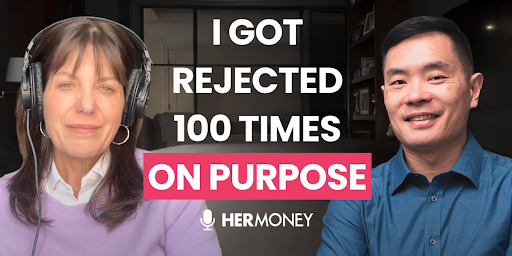 |
If you’ve ever rehearsed asking for a raise in the shower and then chickened out once you got to the office, you’re not alone. You’re also not doing yourself any favors, according to rejection expert Jia Jiang.
Jiang – the entrepreneur behind the viral 100 Days of Rejection experiment and author of the new book Easy Discipline: An Unconventional Way to Achieve Ambitious Things – joined Jean on the HerMoney Podcast to talk about why we’re so bad at asking for what we want, and how to get better at it, especially when it comes to money.
Jiang says the fear of asking for a raise (or a promotion, or a networking introduction) usually comes from a false assumption: that if our boss hasn’t already offered us more, there must be a reason.
He argues the opposite is true and that asking is valuable, whether or not you get a yes. "Sometimes asking itself is showing what you got. It’s showing your medals, right? And then that increases your value in the other person’s eyes, so opportunities will come to you," Jiang explained. |
|
|
|
|
 |
Jiang’s advice works for salary – but building real wealth takes more than a good ask. It takes someone in your corner who can see the whole picture and guide you along the way.
That’s where Willow comes in. Built by women, for women, Willow can match you with a financial professional who will help you make the most of your money. Just take this two-minute quiz to get started. |
|
|
|
| Ask Jean |
 |
| Q: |
Today’s question comes from Megan. She writes: "I keep getting offers to increase my credit limit on my credit card. Should I?" |
| A: |
A credit limit increase isn't automatically good or bad – it depends on how you'll use it. Here's the trade-off:
Where it helps: More available credit gives you breathing room for a big purchase or unexpected expense. It can also improve your credit utilization ratio (how much credit you're using vs. how much you have) – and a lower ratio can be a plus for your credit score.
Where it hurts: A bigger limit can mean bigger temptation. If your spending creeps up along with your limit, you've lost the benefit. Some issuers also run a hard inquiry when you request an increase, which can ding your score in the short term. And if you carry a balance, a higher limit sometimes means a higher required minimum payment.
The bottom line? Say yes if you're disciplined about spending and want the credit-score boost. Say no if a higher ceiling would just mean more room to overspend. |
|
| Submit your questions to Jean here. |
|
|
|
|
|
|
|
| We maintain a strict editorial policy and a judgment-free zone for our community. We strive to remain transparent in everything we do. Website posts and newsletters may contain advertisements, links and mentions of products from our partners. Learn more about how we make money. |
| *This is a sponsored post |
|


