| Subscribe Read in Browser |
 |
|
|
|
|
| The Fed Pressed Pause – Here’s What It Means For Your Wallet |
The Federal Reserve announced yesterday that it’s holding interest rates right where they are. With inflation persisting and job gains staying modest, the Fed isn’t budging (though they are divided) – and Wall Street traders don’t expect a rate cut for at least another year.
Here’s what a "rates on hold" world could actually mean for you:
The not-so-fun part: Borrowing stays expensive. Credit cards, mortgages, car loans – the cost of carrying debt remains high.
The silver lining: High-yield savings accounts and CDs are still offering strong rates – and they could hold here for a while longer. That means right now is still a smart time to lock in a solid rate before the tide actually turns.
So, here are your action items:
💳 If you’re carrying high-interest credit card debt, make a payoff plan your top priority.
💰 Park your emergency fund or short-term savings in a high-yield savings account.
🏦 Consider a CD if you won’t need the funds for a while |
|
|
|
| This Week In Your Wallet |
 |
Today’s college grads were raised on a promise. Get the degree, get the career. That assurance isn’t what it used to be. As Jodi Kantor writes in The New York Times, graduates are being warned their degrees may not deliver opportunity – or even stability (though there are glimmers of hope). But, she’s highlighting two concepts that still hold and can help new grads succeed: craft and need. "Most successful, fulfilled people practice a special thing they know how to do that other people do not. This is craft," she writes. Need boils down to figuring out what society will actually require during your working years."The people I see thriving at work are the ones who chased some bigger need — not imposed by hollow conventional wisdom, but articulated through independent observation," writes Kantor. "Craft gives their work authority. Need gives it propulsion." If you have a soon-to-be grad in your life, this piece is worth sharing.
She handed over control of her finances – and almost lost everything. "Strangers," the buzzy, bestselling memoir from Vanderbilt heiress Belle Burden, reads like a page-turning tell-all about the end of her 20-year marriage. But as The Wall Street Journal reports, tucked inside is a cautionary tale about relationships and money. Burden let her husband manage everything and when he left, she was blindsided by the fallout. One lesson she learned? Work with a financial advisor who speaks to both partners. During her marriage, advisors addressed only her husband. Post-divorce, she found a female advisor who changed everything. "I’m very lucky to have a woman who speaks to me in a way that is understandable without being condescending," Burden says. "It has been revelatory to work with someone who really wants me to understand."
Thinking about divorce? On HerMoney.com, we’re breaking down three financial realities to plan for before proceeding. One that catches many women off-guard is the need to reenter the workforce after years away – and the expenses associated with it. "Consider the costs of tuition for certification programs, fees for career coaching, as well as the expenses of childcare," suggests Amy Hale, CFP and a Regional President with BMO Wealth Management. "These expenditures may well result in a higher-paying job in the future, but they must be factored into your overall financial plan." |
|
|
|
| Things That Make You Money |
|
|
|
|
|
| Should You Claim Social Security Early? One Expert Says Think Hard Before You Do. |
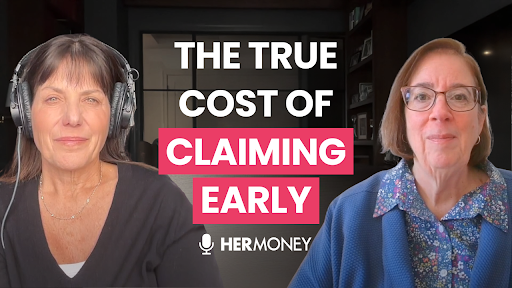 |
The headlines about Social Security are concerning, to say the least. Benefit cuts. A trust fund running dry. Congressional inaction. And you might be thinking: Should I grab my benefits now before something changes?
As Social Security expert Marcia Mantell explains on the HerMoney Podcast, that instinct could be one of the most costly financial mistakes you ever make.
"What I don’t like about these fear-inducing headlines is they hurt the people who haven’t yet claimed, those coming into 62, 63, 64, thinking, ‘Oh my God, I better grab mine now,'" says Mantell, founder of Mantell Retirement Consulting and author of "Social Security: Lightly Toasted, Not Burnt: How to Make Your Best Claiming Decision."
Age 62 is the earliest you can file for Social Security, and for many people, it’s tempting. But Mantell is blunt about the cost. "If you claim at 62, you have made the decision to lock in a 30% permanent reduction to your monthly benefits," she says. "We’re lucky if we get a 2 or 3% raise every year while we’re working. Why would you lock in a 30% cut to your benefits when you can control it?"
So what does waiting actually get you? Find out here. |
|
|
|
|
|
|
|
|
| Ask Jean |
 |
| Q: |
Today’s question comes from Tracy. She writes: "I'm a Gen X'er, worried about my money lasting the duration of my life. Does an annuity make sense for me?" |
| A: |
You’re far from alone – making their money last is a top concern of Gen X’ers heading into retirement. One tool that can help provide peace of mind is an annuity, sometimes called a "DIY pension." With traditional pensions largely a thing of the past for most workers (Social Security aside), annuities can fill a similar role by ensuring your money doesn’t run out before you do.
While that peace of mind is a big plus, one trade-off is flexibility. Whether you fund an annuity with a lump sum or through regular payments, accessing that money early typically triggers penalties. That’s why many financial planners suggest annuitizing only a portion of your overall savings, rather than all of it.
Among the different types, immediate fixed annuities tend to be the most straightforward. You give an insurance company a set amount of money, and they send you a regular paycheck in return. What sets them apart from other annuity types is the combination of a guaranteed minimum payout and a fixed interest rate.
That said, they aren’t something to purchase without doing your homework. "The important question to ask yourself is, 'Is this the absolute best use of my dollars and are there alternatives I haven't explored?'" suggests Jordan Gilberti, CFP and founder of Sage Wealth Group.
It’s also worth knowing who you’re getting advice from – and to consider the objectives of the agent selling the annuity — just as you would other types of investments. Knowing the structure of fees, commissions and incentives whenever you put your money to work is paramount.
The bottom line? Annuities – fixed and otherwise – can be a valuable part of your retirement financial plan, helping to provide peace of mind. Just make sure you do your homework. |
|
| Submit your questions to Jean here. |
|
|
|
|
|
|
|
| We maintain a strict editorial policy and a judgment-free zone for our community. We strive to remain transparent in everything we do. Website posts and newsletters may contain advertisements, links and mentions of products from our partners. Learn more about how we make money. |
| *This is a sponsored post |
|