| Subscribe Read in Browser |
 |
|
|
|
|
| Now Available: The Forever Paycheck |
 |
The paycheck-to-paycheck mentality we work so hard to escape during the early stages of our careers may turn out to be the key to living more comfortably – and stress-free – in retirement.
The challenge is that we need to keep those paychecks coming for decades, but nine in ten non-retired Americans are concerned they don’t know how to do it.
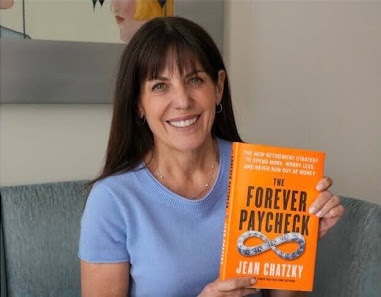
That’s where Jean’s new book, The Forever Paycheck, comes in. Out today, The Forever Paycheck offers a step-by-step plan for making your money go the distance so you can truly enjoy the retirement you’ve worked so hard to get to.
In The Forever Paycheck, Jean argues that most retirement planning starts with a spreadsheet, instead of mapping out the life your money is supposed to fund. "The number you’re saving toward has to be in service of something bigger than the number itself," she recently shared on the HerMoney Podcast.
To help you decide what you want your retirement to actually look like, Jean offers two frameworks: a set of six foundational questions, and a five-step process borrowed from product design. Here’s how to get started. |
|
|
|
| This Week In Your Wallet |
 |
One reason for the widening gender pay gap could be how women form friendships at work. New research shows that women are more likely to become friends with friends of friends in the workplace, creating closely connected groups. Men, on the other hand, tend to form more selective, one-to-one friendships, particularly with colleagues they see as potentially helpful for career advancement. "These differences could have consequences beyond employees’ social lives – including for their careers," The Persistent reports. "While women’s close-knit networks can provide support and stability in the workplace, they may offer less access to wider networks, resources and influence. Men’s more targeted friendships, meanwhile, could be more likely to provide career advantages." Moral of the story? Don’t be afraid to cast a wide friendship net in the workplace.
Simpler, faster and easier. That’s how federal officials describe the new FAFSA college student aid form. As The New York Times reports, the FAFSA update for the 2027-28 academic year is undergoing testing and is scheduled to be made widely available to students by Oct. 1. According to federal officials, the new form can be completed more quickly and will give students an estimate of their financial aid eligibility much faster than previous versions did. "Students and their parents often complete the form at evening or weekend workshops," the NYT notes. "With a swift response, they can discuss the results and head home with a better idea of how much aid they can expect for college, rather than having to follow up again later."
And whether it’s college tuition or diapers, it goes without saying that children are expensive. You’d assume that would make childfree adults feel better about their finances – especially as they approach retirement – but new research suggests that’s not the case. According to a report from Allianz, 54% of Americans without children feel confident they can meet their retirement savings goal, compared with 72% of those with kids. One reason: for many new parents, welcoming a baby into the world motivates them to make a plan for their money in a way that supports their future as well as their child’s. "If that wake-up call never comes, you can fall behind," Kelly LaVigne, vice president of Consumer Insights at Allianz Life, told Yahoo Finance. "Not having kids can create a false sense of financial comfort. Your day-to-day feels manageable, so retirement planning stays in the background." |
|
|
|
| Things That Make You Money |
|
|
|
|
|
| Ask Jean |
 |
| Q: |
Today’s question comes from Susan. She writes: "I’m working class, single, and plan to retire in three years. I need help preparing for every aspect of retirement, from taxes to Medicare. I can’t afford to hire a CPA or financial planner. I know a fee-only fiduciary is best, but when I go to websites, they seem to have carved out a specific silo. Is there someone who can help me, a person with less than $500k in investable assets?" |
| A: |
Unfortunately, the myth that getting help from a financial professional is something that only wealthy people do is exactly why so many women feel shut out of financial planning. So let’s get one thing out of the way first: you’re not asking for too much, and you’re not too small for good advice.
Many advisors charge a percentage of assets under management, which means they set minimums, and their revenue scales with your portfolio. However, that’s not the only model – and there are places you can look to get the retirement help you’re seeking at a cost that fits your budget. Here’s where to start. |
|
| Submit your questions to Jean here. |
|
|
|
|
|
|
|
| We maintain a strict editorial policy and a judgment-free zone for our community. We strive to remain transparent in everything we do. Website posts and newsletters may contain advertisements, links and mentions of products from our partners. Learn more about how we make money. |
| *This is a sponsored post |
|


