| Subscribe Read in Browser |
 |
| Today's newsletter is sponsored by |
 |
|
|
|
|
|
|
| This Week In Your Wallet |
 |
Inflation sizzled in September. Consumer prices were up 3.7% from a year ago, and jumped 0.6% from August. As NPR reports, a spike in energy prices tied to the U.S. war with Iran drove the cost of living higher. The New York Times put together a list of the major budget items costing you more – everything from airline tickets and streaming services to car rentals. "Some of these price increases, like for airfares, are ripple effects from the price of other commodities, like jet fuel, jumping higher because of the war in Iran," the NYT reports. If your budget feels tight, now is the time to spend 10 minutes auditing your recurring bills. See what you can cut – things like streaming and other subscriptions should always be fair game.
Is the average 50-something really worth $1.5 million? If you’ve seen the headlines and you’re nowhere close, don’t panic. That’s actually the mean. Among those in their 50s, median net worth is now $271,200. The gap between the two is more than $1 million, because extreme wealth skews the average. "The average is pulled up by folks who have been putting away money in a 401(k)," says Jonathan Swanburg, a certified financial planner in Houston. "They’ve gotten the advantage of buying houses in their 20s, and they’ve quintupled in value."
The "Sunday scaries" are hitting harder. A new FlexJobs survey shows more than half of U.S. workers say they feel dread before heading back to work after the weekend, with an unfinished to-do list as the most commonly cited cause of stress. For some, putting in a little work on Sunday can help relieve that stress, but only with guardrails in place. "If I can just log in really quick and respond to this email, that’s all I’m going to do," Kia-Rai Prewitt, a psychiatrist with Cleveland Clinic’s Behavioral Health, tells The Wall Street Journal. "You have to set the boundary and say, ‘I’m not going to respond to other emails.’" |
|
|
|
| Things That Save You Money |
|
|
|
|
|
| What Your Anxiety Around Money Is Really Trying To Tell You |
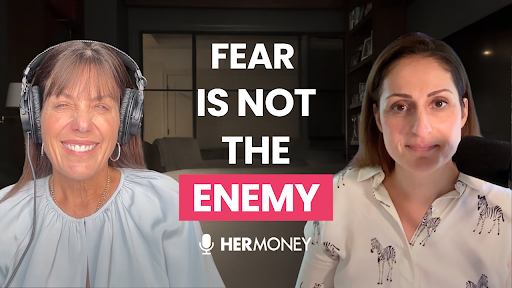 |
Fear is having a moment. AI is threatening jobs, there’s global instability and inflation is eating away at your paycheck. According to Pew Research, 60% of Americans feel scared when they think about the future, and women are more likely than men to say so.
Financial journalist and bestselling author Farnoosh Torabi says when it comes to fear, don’t try to power through. Instead, lean into what it’s trying to tell you. She joined Jean on the HerMoney Podcast to talk about her book, A Healthy State of Panic: Follow Your Fears to Build Wealth, Crush Your Career, and Win at Life.
Her premise is that some fear is actually good for you. So how do you tell which kind you have? "With the healthy fear, there’s a part of you that feels like there’s a shadow of hope – like, I’m going to be able to do something, whether it’s just reflect, ask questions, or take a beat," says Torabi. "Unhealthy fear keeps you in stasis. It is perpetual. You feel like you’re drowning."
Either way, the first move is to stop running. "When you dismiss fear, you’re dismissing your life. You’re dismissing your lived experience, and I don’t think anybody wants to do that," she adds. |
|
|
|
|
| Ask Jean |
 |
| Q: |
Today’s question comes from Joyce. She writes: "Jean, can you please share some tips for Medicare open enrollment?" |
| A: |
Medicare open enrollment is officially here and will run through December 7. For those unfamiliar, this is a chunk of time when current Medicare beneficiaries can review, change, or drop their health and prescription drug plans.
Recently, two of the nation’s top Medicare experts, Diane Omdahl and Melinda Caughill of 65 Incorporated, joined the HerMoney Podcast for a deep dive into all things Medicare and open enrollment. You can listen to the full episode here, but these were their main takeaways:
Review your plan now, even if you’re happy with it: The list of drugs your plan may cover can change, and unfortunately doctors can move in and out of networks with zero warning or notice.
Give plans a beat before you compare: New plans are rolling out, but "we tell people to pay attention toward the end of October to give the plans a chance to get all the information right… and then compare," Omdahl suggests. Then ask: "Is there a better pharmacy? Are my drugs still all covered? What about my doctors?"
Let a tool do the legwork on drug coverage: HeyMOE, created by Omdahl and Caughill, is a tool that compares Part D plans for you for $30 a year and flags potential savings. You can also get one-on-one Medicare counseling at no cost through your State Health Insurance Assistance Program.
Don’t wait until the last minute: With open enrollment running through December 7, the clock is ticking. "The biggest mess we tend to deal with with our clients is that they run up against a deadline," says Omdahl.
Last but not least, beware of scams. They’re common during open enrollment. Here’s what to watch out for. |
|
| Submit your questions to Jean here. |
|
|
|
|
|
|
|
| We maintain a strict editorial policy and a judgment-free zone for our community. We strive to remain transparent in everything we do. Website posts and newsletters may contain advertisements, links and mentions of products from our partners. Learn more about how we make money. |
| *This is a sponsored post |
|


