| Subscribe Read in Browser |
 |
|
|
|
|
| This Week In Your Wallet |
 |
Helicopter parenting doesn’t stop at graduation, apparently. The Wall Street Journal reports a growing number of employers are seeing Gen Z job hunters bring their parents into the hiring process – literally. "More parents are calling up hiring managers, applying for jobs on their adult child’s behalf, and even showing up – or lurking just off-screen – on Zoom calls to help navigate difficult conversations or go over benefits packages," reports the WSJ. One recent survey found that 20% of Gen Z’ers had a parent attend a job interview with them – but not everyone wants the help. "That trend has really hurt my generation by creating this kind of stereotype that we need our hands held," says Paul "PB" Branson, a 22-year-old recent graduate.
Buy-now-pay-later (BNPL) isn’t just for shopping sprees anymore. Lenders now offer it for water bills, dental work – you name it. Americans put $160 billion through BNPL loans last year, nearly double 2023’s total, according to The New York Times. It’s a small number compared to the $3 trillion we charge on plastic annually, but BNPL keeps growing by double digits. The lingering question is whether the growth is driven by preference or by people desperate to pay their bills. Lauren Saunders of the National Consumer Law Center tends to think it’s the latter. As she puts it, the loans "address the real need that people are short of funds, but just adding fees to their monthly budget and leaving them short next week is not the answer."
$1.50 hot dog and soda combo with a side of Medicare? Costco’s got you covered. As USA Today reports, the retailer is partnering with nonprofit insurer SCAN Group to offer jointly branded Medicare Advantage and supplemental plans in a few states, pending regulatory approval. "Because Costco warehouses typically have pharmacies and sell eyeglasses and hearing aids, those could be another retail option for older adults on a private Medicare plan," USA Today notes. Got Medicare questions of your own? Don't miss our special HerMoney Podcast episode dropping September 16, where we break down everything from choosing the right plan to enrollment deadlines. |
|
|
|
| Things That Save You Time |
|
|
|
|
|
| Protected vs. Growing: The Split Your Portfolio Actually Needs |
 |
When's the last time you felt genuinely confident your portfolio could survive a bad year? For most of us, it's some version of, "I'm diversified – stocks for growth, bonds for safety – so I should be fine."
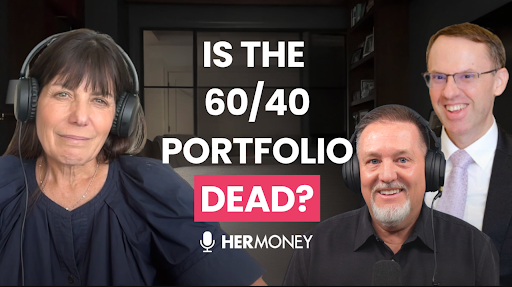
That playbook worked for decades. Then 2022 broke it: stocks and bonds both posted double-digit losses at the same time. "Safe" wasn't so safe after all. "2022 really made advisors as well as clients and retirees stop and look, saying, 'Hey, this stocks and bonds mixture didn't work for me,'" Brad Pistole, President and CEO of the Ozarks Retirement Group, shared on a special episode of the HerMoney Podcast, sponsored by LIMRA.
What went wrong? As Dr. Wade Pfau, a research fellow with LIMRA’s Retirement Income Institute, explains, rising interest rates raise the odds of stocks and bonds losing money at the same time. It's rare – but not impossible. Which means it could happen again.
That 2022 wake-up call is what pushed Pfau to start researching whether "protection" deserves to be its own asset class, sitting right alongside stocks, bonds, and commodities. Asset classes, he explains, are pieces of the market that don't all move in the same direction at once, which is exactly what makes diversifying across them worth doing in the first place.
In Pfau’s research, "protection" largely means fixed index annuities – a type of structured annuity where the performance follows (though doesn’t mirror) stock market indexes. With these products, your principal is protected, so you don’t experience losses. The tradeoff is that if the index performs well, you don’t capture the full upside. Instead, you get a piece of it. Pfau found that adding this kind of protected asset class into the mix can actually improve what’s called an investor’s efficient frontier – bringing about a better risk-adjusted return, not just a more conservative one.
So how do you actually build more protection into your portfolio? We've got the playbook – click here for the full breakdown. |
|
|
|
|
| Ask Jean |
 |
| Q: |
Today’s question comes from Amy. She writes: "How do I calculate my net worth?" |
| A: |
Your net worth is the clearest snapshot of where you stand financially – everything you own, minus everything you owe.
To find your number, grab a notebook or open a spreadsheet and start with your assets: |
|
| ● |
Cash on hand (checking, savings, money market accounts, etc.) |
| ● |
Investments |
| ● |
Real estate you own |
| ● |
High-value personal property (car, jewelry, collectibles) |
| ● |
Anything else of value – a business you run, a life insurance policy, etc. |
|
| Assign a dollar value to each item and total them up – that’s your assets side. Next, do the same for any debts: |
| ● |
Credit card balances |
| ● |
Bills you still need to pay |
| ● |
Longer-term debt – mortgage, student loans, car loans, personal loans |
|
| Add those up too, then subtract your total liabilities from your total assets and voilà – that’s your net worth. |
| Submit your questions to Jean here. |
|
|
|
|
|
|
|
| We maintain a strict editorial policy and a judgment-free zone for our community. We strive to remain transparent in everything we do. Website posts and newsletters may contain advertisements, links and mentions of products from our partners. Learn more about how we make money. |
| *This is a sponsored post |
|


