|
Subscribe
Read in Browser
|

|
|
Stat Of The Day
|
|
3 in 10
|
That’s how many Americans get at least some of their news from email newsletters, according to a new Pew Research Center report. The catch? Many aren’t reading most of what lands in their inbox.
Which brings us to our next point…
|
|
|
|
|
Wanted: Your Feedback!
|
What do you love about this newsletter? What could be better? And what do you want more of?
Tell us! Take our quick survey (it’ll only take a couple of minutes), and you’ll be entered to win an Amazon gift card.
📝 TAKE OUR NEWSLETTER SURVEY HERE 📝
HerMoney’s goal is simple – to bring you the news, tips and tools to build a stronger (and smarter) financial life. But the best way to make what we do even better? Hearing directly from you.
Thanks in advance for your feedback, and more importantly, for being part of the HerMoney community!
|
|
|
|
Recession Or Rough Patch?
Making Sense Of Q1
|
|
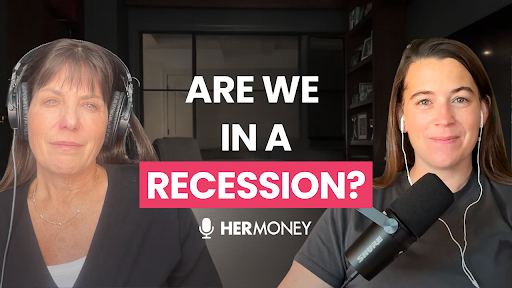
Q1 2026 was…a lot. Tariffs, oil spikes, war in the Middle East and recession chatter – it’s all been a flood of headlines and not exactly the calming kind. But what does it all actually mean for your money?
On the HerMoney Podcast, Jean sat down with economist Kathryn Edwards to zoom out. Instead of reacting to every headline, they looked at the full quarter – what happened, what it signals and what could be coming in Q2.
The big questions that keep coming up – are we in a recession? Or is one around the corner? – don’t have a simple answer.
"How do you know when you’ve had a bad week?" Edwards says. "A bird poops on your head Monday morning…you need to let the week evolve…But if by Thursday you’ve gotten into a car accident, failed a test, missed a car payment, you could say, all right, this week is bad. That is exactly how recessions work."
Still, the data hasn't been all that comforting. As Edwards puts it, "The economy is teetering on the edge. You cannot pursue multiple destructive economic policies and not have that bill come due."
|
|
|
|
|
|
This Week In Your Wallet
|

|
Today’s workplace = "a funeral in the office." As The Wall Street Journal reports, companies on a mission to cut costs are stripping away the little things that once made work enjoyable (goodbye free espresso, offsites and travel). The result is a whole lot less joy in the office. According to AlphaSense, CFOs at large U.S. companies mentioned "efficiency" on 307 earnings calls this past quarter (as of March 26), up from 219 a year ago and the highest level since at least 2020. "There’s almost nobody who is feeling positive vibes about their job right now," Rocco Seyboth, a longtime software marketer outside Seattle, tells the WSJ. "We’re in the AI dread era."
To many families, caregiving is priceless – but AARP just put a number on it, and it’s staggering. In 2024, 59 million Americans caring for adults provided 49.5 billion hours of care. At an average value of $20.41 an hour, that adds up to a jaw-dropping $1.01 trillion in unpaid labor. And even that may be low. As Carolyn McClanahan, a physician and CFP, tells CNBC, caregiving is so widespread it’s "almost like an epidemic." Her advice? Start the conversation early. The sooner families plan for aging and care needs, the better off everyone will be.
💡 RELATED:
❤️🩹 HerMoney Podcast: Why Healthcare Might Be The Biggest Threat To Your Retirement Plan
👩⚕️ Explore long-term care options
Dreaming about money? Your subconscious could be trying to tell you something. HerMoney tapped dream experts to decode the five most common money dreams and what they really mean. One of the biggest? Losing money, which often reflects how you feel about your finances right now. "You may be experiencing some financial setbacks," explains Anna-Karin Bjorklund, author of "Dream Guidance." But here’s the flipside – even if your bank account is thriving, this dream can signal a different kind of loss. "It may also be a way for you to vent any unconscious fears you may be having about losing other aspects of yourself as well, such as your own self-worth, power, and not being successful enough," she adds.
|
|
|
|
Wait… It’s April Already?
Let’s Talk Money.
|
Somehow tax season is already staring us down, and we’re finally pausing to take a look at what we earned, what we spent, what we saved… And we can either close those tabs and promise to deal with it later… or we can decide THIS is the year we actually take control.
That’s where Monarch comes in. Monarch is the all-in-one personal finance tool designed to make your life easier. It brings your entire financial life — budgeting, accounts & investments, net worth, and future planning — together in one dashboard, on your phone or laptop.
What do we love about it? For starters, it's the thing that can move you from just tracking your money to actually doing something with it. So when that tax refund hits we'll know exactly where it will make the biggest impact, whether that’s paying down debt, boosting savings, or finally moving the needle on something that matters. Ready to achieve your financial goals for good with Monarch? Use code HERMONEYFAM at monarch.com for half off your first year!
|
|
|
|
|
Things That Save You Money
|
|
|
|
|
|
|
|
|
|
|
Ask Jean
|

|
| Q: |
Today’s question comes from Francine. She writes: When it comes to estate planning, do I need to hire a professional, or can I handle it myself?
|
| A: |
The most important thing isn’t whether you hire a professional or go the DIY route — it’s making sure you actually have an estate plan in place. Contrary to popular belief, estate planning isn’t just for the wealthy. It’s something every adult should think about. Yet while 56% of Americans say estate planning is important, only about 33% have actually documented their end-of-life plans.
That said, in the vast majority of cases — i.e. if you can afford it — you want an attorney. This is non-negotiable if you have a complicated situation, including a blended family, significant assets, a business, or very complex wishes about how your money should be distributed. They can draft a will and help make sure your documents reflect your personal and financial goals. Costs vary by location, but a basic will may run a few hundred dollars, and more comprehensive plans can cost more depending on complexity. An attorney can also coordinate with your financial planner to ensure your estate plan aligns with your broader goals – everything from saving and spending strategies to how assets will transfer to your heirs.
If you can’t afford to hire an attorney, then by all means, check out online estate planning tools, as they can be a more affordable starting point. These platforms guide you through creating basic documents, such as a will, a health care proxy, and a power of attorney. In some cases, local or state bar associations and nonprofit legal groups also provide free or low-cost forms that can help guide you.
The key here, though, is not to let the process intimidate you. Estate planning isn’t about being in the 1%. It’s about having a say in what happens next – and giving the people you care about clarity and peace of mind down the road.
|
|
|
Submit your questions to Jean here.
|
|
|
|
|
|
|
|
|
We maintain a strict editorial policy and a judgment-free zone for our community. We strive to remain transparent in everything we do. Website posts and newsletters may contain advertisements, links and mentions of products from our partners. Learn more about how we make money.
|
|
*This is a sponsored post
|
|